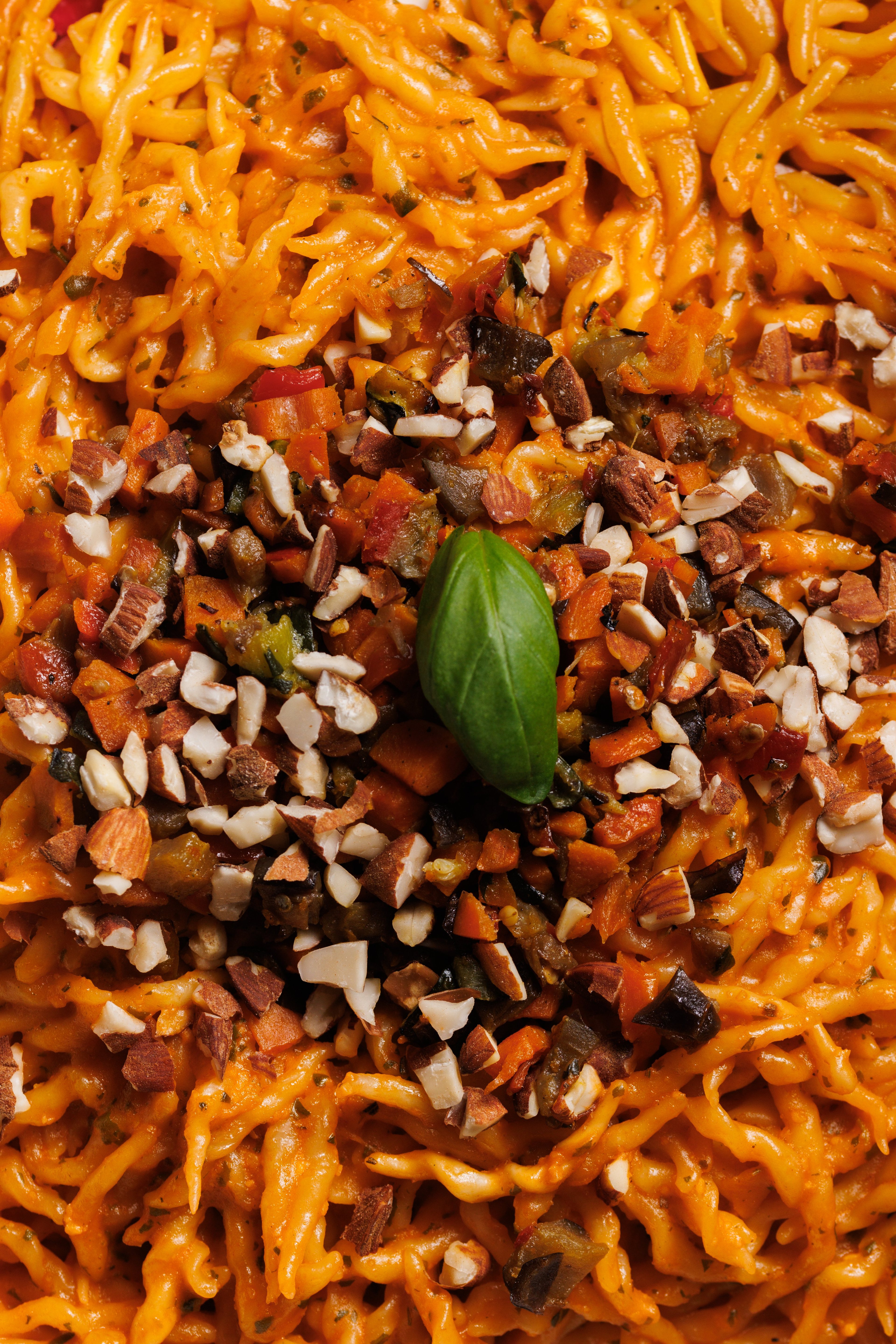
Wheat and legumes, together in the dough
↳ Sottosezione
ArticleSubsection
child #1 • id=datasource-0
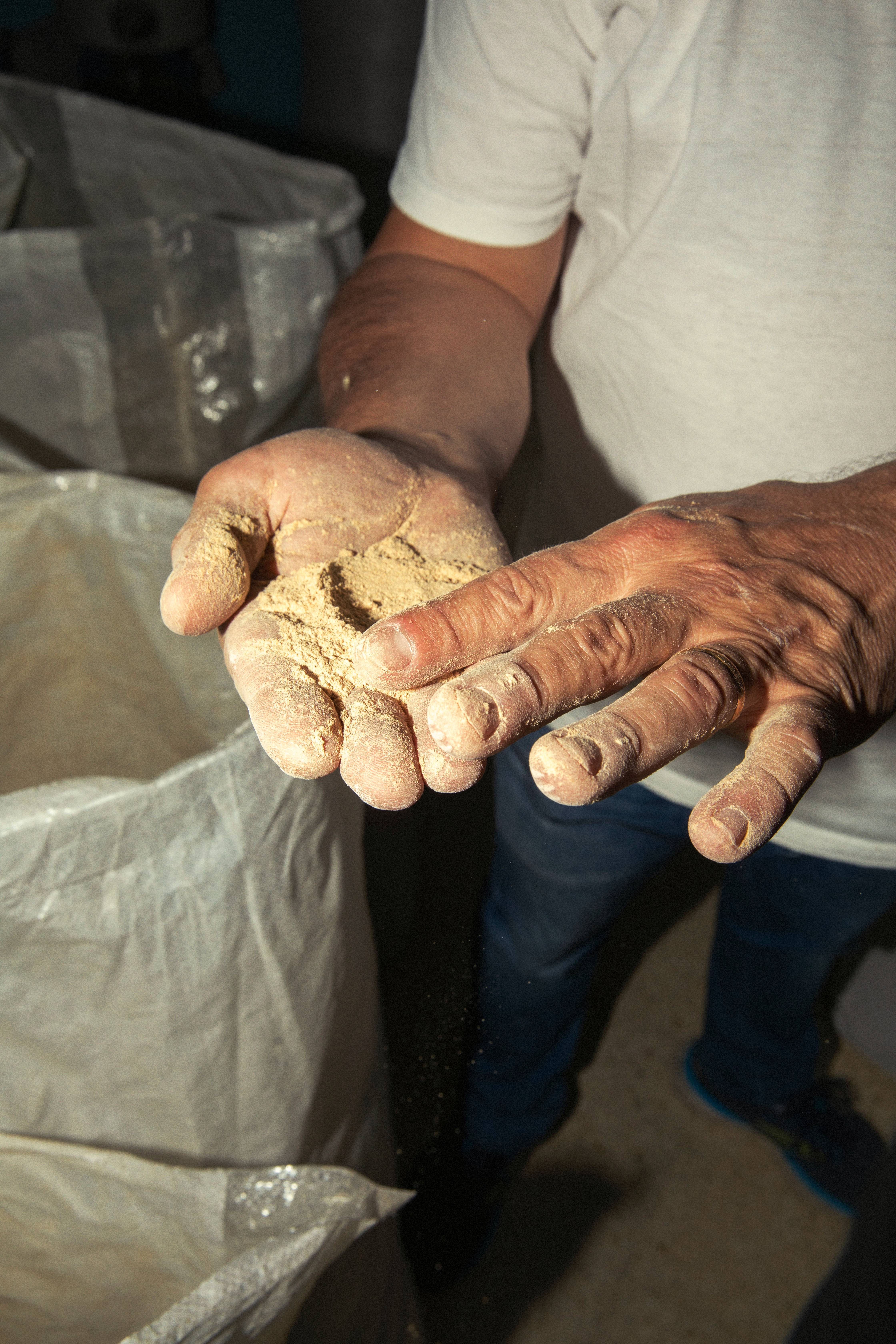
At miscusi, one of the semolina blends used for Superpasta contains legumes, so we're writing this article with our hands in the dough, in the most literal sense.
Legume pasta is pasta made from legume flour: lentils, chickpeas, peas, broad beans or lupins. The products available fall into two families. There are those made entirely from legumes, with no wheat at all, and those in which legume flour is added to durum wheat semolina, which Italian law calls special pasta. The two families have very different nutritional values, and the only way to tell them apart is the ingredients list.
Legume pasta is pasta made from legume flour: lentils, chickpeas, peas, broad beans or lupins. The products available fall into two families. There are those made entirely from legumes, with no wheat at all, and those in which legume flour is added to durum wheat semolina, which Italian law calls special pasta. The two families have very different nutritional values, and the only way to tell them apart is the ingredients list.
↳ Sottosezione
ArticleSubsection
child #2 • id=datasource-1
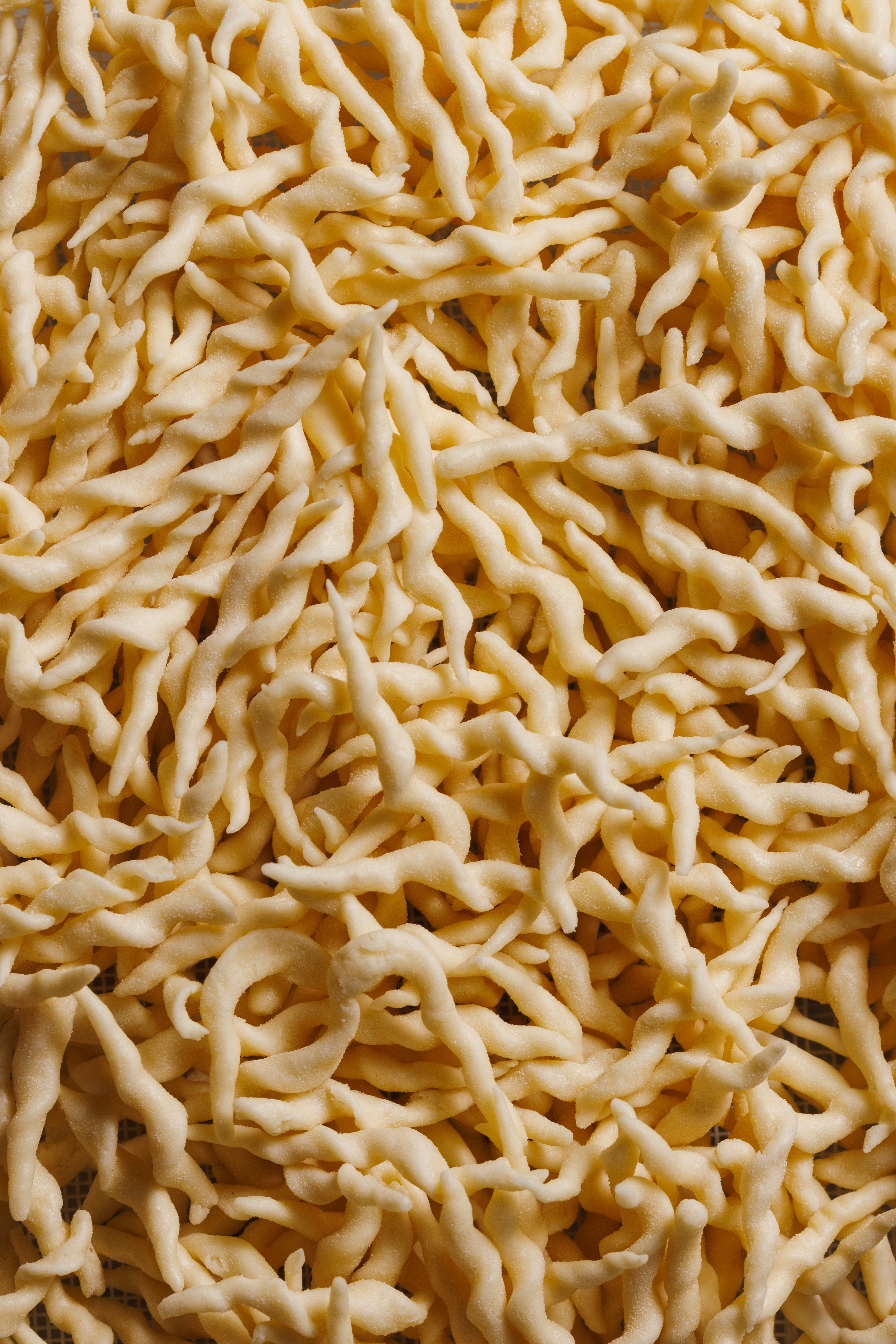
Wheat is short of one amino acid, legumes of another. In the same dough, they make up for each other and improve the protein.
↳ Sottosezione
ArticleSubsection
child #3 • id=datasource-2
Two pastas with the same name
One is made entirely from legumes; the other is semolina pasta with legume flour. The law sets out the difference, and for once it does so clearly.
The reference text is Italian Presidential Decree No. 187 of 9 February 2001, the Italian regulation on milled products — the technical term for flours and semolina — and pasta. Article 6 reserves the designation — the legal name under which a product is sold — “durum wheat semolina pasta” for products made exclusively from durum wheat semolina and water. Article 7 opens a door: it allows special pasta, meaning “the pasta referred to in Article 6 containing food ingredients other than soft wheat milled products”, and requires the designation to state the base pasta followed by the ingredient that characterises it DPR 187/2001 [1].
Semolina pasta with chickpea flour is therefore special pasta, and its label calls it what it is. Pasta made only from lentils, however, falls outside that decree because it contains no semolina, and is named according to European food labelling rules EU Regulation 1169/2011 [2].
Article 22 of the same regulation contains the rule you need at the supermarket shelf: when an ingredient appears in the name or is highlighted on the packaging, its percentage must be declared. If the name says “chickpeas”, you have a right to know the percentage of chickpeas, and it is on the label.
↳ Sottosezione
ArticleSubsection
child #4 • id=datasource-3
How to read the label in half a minute
Three lines, thirty seconds, and you'll look like you know your way around the supermarket.
| 1. The first ingredient. If it starts with “durum wheat semolina”, you have special pasta in which the legume complements the wheat. If it starts with legume flour, the legume is the base. |
| 2. The percentage next to the legume. This is mandatory when the legume is in the product name. Pasta declaring 50% chickpea flour is one thing; pasta declaring 12% is another. |
| 3. The protein line in the nutrition table. Below you'll see why this number sums up everything else. |
↳ Sottosezione
ArticleSubsection
child #5 • id=datasource-4
Why the nutritional values you find online are almost always wrong
Because almost all Italian pages publish the values for dried legumes and present them as pasta values.
It sounds like nutritionists splitting hairs. We checked the food composition tables from CREA, the Italian Ministry of Agriculture's research centre: they include dried lentils, dried chickpeas, dried peas and semolina pasta, but contain no entries for legume flours or legume pasta CREA [3]. The situation is the same in the US FoodData Central database: the only legume pasta entries are uploaded by manufacturers, in other words labels USDA [4].
And the numbers really are different. Dried lentils have 22.7 grams of protein and 13.8 of fibre per 100 grams, while a commercially available lentil-only pasta declares 26 and 7.6. Processing is responsible: the flour is dehulled — its skin is removed — then mixed into dough and extruded, meaning pushed through dies that give it its shape, and what comes out is a different food.
↳ Sottosezione
ArticleSubsection
child #6 • id=datasource-5
Nutritional values of legume pasta, with the source alongside
For finished legume pasta, the only available data are manufacturers' declarations. We set them alongside semolina pasta, which has an institutional entry.
Sources: manufacturers' nutritional declarations for the first three columns, CREA tables for the fourth CREA [3].
Two things deserve attention. The first is how much variation there is within the category: two legume-only pastas declare 13.5 and 7.6 grams of fibre, almost twice as much in one as the other, with the same name on the shelf. So when you read that legume pasta is high in fibre, you're reading an average, and averages aren't sold in supermarkets: the real number is on the pack in your hand.
The second concerns the third column. A semolina and legume blend sits between the two worlds by design: fibre and protein rise compared with wheat pasta, and there is more to the protein story, as we'll see below.
| Per 100 g of dry product | Legume-only pasta, red lentils and chickpeas | Red lentil-only pasta | Blend of 50% wholemeal semolina and 50% chickpeas | Semolina pasta (CREA 000800) |
|---|---|---|---|---|
| Carbohydrates | 47.1 g | 50 g | 56 g | 72.7 g |
| of which sugars | 2.0 g | 1.2 g | 1.9 g | 2.2 g |
| Fibre | 13.5 g | 7.6 g | 10 g | 1.7 g |
| Protein | 24 g | 26 g | 17 g | 13.5 g |
| Fat | 3.0 g | 1.7 g | 3.9 g | 1.2 g |
Sources: manufacturers' nutritional declarations for the first three columns, CREA tables for the fourth CREA [3].
Two things deserve attention. The first is how much variation there is within the category: two legume-only pastas declare 13.5 and 7.6 grams of fibre, almost twice as much in one as the other, with the same name on the shelf. So when you read that legume pasta is high in fibre, you're reading an average, and averages aren't sold in supermarkets: the real number is on the pack in your hand.
The second concerns the third column. A semolina and legume blend sits between the two worlds by design: fibre and protein rise compared with wheat pasta, and there is more to the protein story, as we'll see below.
↳ Sottosezione
ArticleSubsection
child #7 • id=datasource-6
Protein: how much, and how good?
There is much more than in wheat pasta, and its quality depends on an amino acid that legumes lack.
Legume proteins are low in sulphur-containing amino acids, such as methionine and cysteine; cereal proteins are low in lysine. Since a protein's quality score is determined by its scarcest amino acid, combining the two sources raises the blend's score above either one alone. The most comprehensive review on the subject calculates DIAAS — the index the FAO recommends for measuring protein quality — across dozens of datasets: wheat scores 48, peas 70, and peas with wheat in a 60:40 ratio reach 85 Herreman 2020 [5]. The index and method are defined in a 2013 FAO expert consultation document FAO 2013 [6].
This has been measured in a finished product. In legume-only pastas, lysine is more than 50% above the international recommendation, whereas in a cereal-based gluten-free pasta it is less than half Laleg 2016 [7]. The highest point on the curve is therefore where cereal and legume share the same dough, where two proteins that struggle alone lend each other a hand.
A detail about chickpeas. The statement “legumes are limited in methionine” — meaning methionine is their scarcest amino acid — holds for lentils, peas and broad beans, whereas in chickpeas the limiting amino acid measured by bioassay, a test on laboratory animals, is tryptophan Nosworthy 2017 [8].
↳ Sottosezione
ArticleSubsection
child #8 • id=datasource-7
Legume pasta contains carbohydrates
Yes, and it is a carbohydrate dish in every sense. It has between a quarter and a third fewer than semolina pasta.
The table ranges from 47 to 56 grams per 100 grams of dry product, compared with 72.7 for semolina pasta. If you buy it to remove carbohydrates from your diet, you're removing some: removing them all would take a different shelf and a different restaurant too. Eating legume pasta means eating carbohydrates, with more protein and fibre alongside.
If you're interested in the place of carbohydrates in a day, we explore it in what carbohydrates are for and does pasta make you gain weight?.
↳ Sottosezione
ArticleSubsection
child #9 • id=datasource-8
Glycaemic index: what governs it in a plate of pasta
In pasta, the glycaemic index — how quickly a food raises blood sugar, measured against glucose — depends more on the product's structure than on its starting flour, and formulations with legumes fall in the low range.
A systematic review — research that exhaustively gathers studies on a question — collected measured glycaemic index values for 95 pasta products and divided them by category: the average for the legume category is 46, compared with 55 for refined wheat pasta Di Pede 2021 [10]. The authors attribute pasta's behaviour to its compact, dense microstructure, which limits enzymes' access to starch granules.
Within each category, however, values vary considerably, and formulation and processing influence them more than the raw material: among legume pastas measured in primary studies, they range from just over 20 to over 50. There is therefore no single number for legume pasta, and anyone giving one is simplifying.
Then there is a factor that applies to any pasta, familiar to anyone who has reheated yesterday's leftovers. In twelve healthy adults, freshly cooked chickpea pasta had a glycaemic index of 39, while the same pasta refrigerated for twenty-four hours and reheated fell to 33, with resistant starch — the portion of starch that escapes digestion — doubling Bojarczuk 2024 [11]. Twelve people is a small sample, and the mechanism is the same one we described when discussing resistant starch and cooled pasta.
↳ Sottosezione
ArticleSubsection
child #10 • id=datasource-9
Does legume pasta make you gain weight?
No food makes you gain weight on its own, and the right question is different: what has actually been measured?
A University of Milan study compared lentil pasta, chickpea pasta, durum wheat pasta and a gluten-free pasta in healthy adults who regularly ate pasta, all served with tomato sauce. In the protocol with a subsequent freely chosen meal, energy intake at that meal was about 20% lower after lentil pasta than after durum wheat pasta, with a similar effect after chickpea pasta Cioffi 2024 [12].
Three clarifications help put the finding in context. First: the researchers measured consumption at that moment, not body weight in subsequent weeks, so the study says nothing about weight loss. Second: the effect was clear in men, while in the second protocol only in women, in small samples. Third: this is a single study, so it should be treated as an observation that further research needs to confirm.
If you're looking for an answer about how much you eat in a day, the only scale that counts is the whole day, of which a dish is only one part. We wrote about this in pasta on a diet and does pasta make you gain weight?.
↳ Sottosezione
ArticleSubsection
child #11 • id=datasource-10
Texture is the real craft
It is the variable on which legume pasta stakes everything, and there is a number that measures it.
In the same Milan study, participants rated the pastas on a ten-centimetre scale. Durum wheat pasta scored 8.9 for texture, lentil-only pasta 4.1 and chickpea-only pasta 3.5, with statistically robust differences Cioffi 2024 [12]. These were Italians eating pasta at least five times a week, so an experienced judgement.
The reason is structural. In wheat pasta, the protein network — the mesh of proteins holding the dough together, gluten in wheat — forms during drying and supports the starch granules during cooking; in legume-only pasta that network forms during cooking itself, and measurements on broad bean, lentil and black bean pastas show lower firmness, cohesiveness and elasticity, with much higher water absorption Laleg 2016 [7].
This is why we chose the blend: durum wheat semolina provides the network that holds up during cooking, while the legume adds protein and fibre. We've written a separate article on cooking and dressing pasta with legumes, because it is a craft of its own.
↳ Sottosezione
ArticleSubsection
child #12 • id=datasource-11
At miscusi, the legumes are in the semolina
You came here to find out what is inside legume pasta, and now you know enough to be picky with us too. Go ahead.
We chose the blend for the reasons you've just read. One of the semolina blends we use to make Superpasta contains legumes, alongside our organic Kronos durum wheat and stone-ground ancient grains such as Perciasacchi. It is the pasta option on our menu with the most protein: over 17 grams per serving (miscusi data [13]).
If you're interested in the raw ingredients, our other semolinas are covered in the article on ancient grains and the one on raw ingredients.
Come and try it: choose a dish from the menu or go make your own, choosing your pasta shape, sauce and protein source one by one. Runners, people on a diet, plant-based eaters: almost anyone can eat at miscusi. Book your table and ask for the semolina with legumes.
↳ Sottosezione
ArticleSubsection
child #13 • id=datasource-12
Quick answers (FAQ)
What is legume pasta?
It is pasta made from legume flour, generally lentils, chickpeas, peas or broad beans, and you may also find it called pasta with legume flour or legume flour pasta: names vary, but there are two products. There are legume-only pastas without wheat, and durum wheat semolina pastas with added legume flour, which Italian law calls special pasta. The ingredients list is the only way to tell them apart.
Does legume pasta contain carbohydrates?
Yes. Labels declare between 47 and 56 grams of carbohydrates per 100 grams of dry product, compared with 72.7 for semolina pasta according to CREA tables. It is therefore a carbohydrate dish, with more protein and fibre than wheat pasta.
How much protein does legume pasta have?
Legume-only pastas declare between 24 and 26 grams per 100 grams of dry product, semolina blends around 17, and semolina pasta 13.5. European thresholds for claims, the nutritional wording allowed on labels, are expressed as a percentage of energy: “source of protein” requires 12% of energy from protein, “high protein” 20%, and a 50% blend falls just below the second EC Regulation 1924/2006 [9].
Does legume pasta have a low glycaemic index?
In the systematic review of pasta, the legume category averages 46 compared with 55 for refined wheat pasta, placing it in the low range. Values vary considerably within the category because formulation and processing drive the differences, and there is no single number valid for every legume pasta.
Does legume pasta make you gain weight?
No food makes you gain weight on its own. In a University of Milan study, energy intake at the subsequent freely chosen meal was about 20% lower after lentil pasta than after durum wheat pasta. The researchers measured consumption at that moment, not body weight, so the study says nothing about weight loss, and it is a single study in small samples.
Is legume pasta suitable for people with coeliac disease?
Legume-only pasta contains no wheat, whereas special pasta with durum wheat semolina does. Beyond the ingredient, how it is cooked matters in a restaurant: cooking gluten-free pasta in the same water as wheat pasta raises gluten above the legal limit. miscusi dishes are not suitable for people with coeliac disease.
What are the nutritional values of lentil pasta?
A commercially available red lentil-only pasta declares 50 grams of carbohydrates, 7.6 of fibre, 26 of protein and 1.7 of fat per 100 grams of dry product; the one used in the University of Milan study had 45.7 of carbohydrates, 12.6 of fibre and 26.4 of protein Cioffi 2024 [12]. CREA tables have no entry for lentil pasta, so many pages publish values for dried lentils, which are a different food.
What are the nutritional values of chickpea pasta?
The chickpea-only pasta used in the University of Milan study has 43.6 grams of carbohydrates, 14 of fibre, 22.3 of protein and 6.6 of fat per 100 grams Cioffi 2024 [12]. Numbers vary from brand to brand, so the pack is what counts.
What are the nutritional values of pea flour?
CREA tables have no entry for pea flour or pea pasta, so reliable data come from the label of the product you buy. There is a measured number for protein quality: in DIAAS, the FAO protein quality index, peas score 70 compared with 48 for wheat Herreman 2020 [5].
How do you choose affordable or organic legume pasta?
There is no recent reliable price survey, so we won't give figures. To compare two packs, look at the price per kilo alongside the declared legume percentage, because that tells you how much legume you're paying for. Organic certification tells you how the legumes were grown and says nothing about nutritional values.
Does legume pasta cause bloating like whole legumes?
No, and the reason lies in processing. Legumes contain oligosaccharides that the human intestine cannot digest, and pasta-making combined with cooking removes between 41 and 73% depending on the legume. A plate of pasta with legumes is therefore different from a bowl of whole legumes.
↳ Sottosezione
ArticleSubsection
child #14 • id=datasource-13
Sources
| 1. Italian Presidential Decree No. 187 of 9 February 2001, Regulation revising the rules on the production and marketing of milled products and pasta, Articles 6 and 7. https://www.normattiva.it/uri-res/N2Ls?urn:nir:presidente.repubblica:decreto:2001-02-09;187 |
| 2. Regulation (EU) No. 1169/2011 on the provision of food information to consumers, Articles 17 and 22. https://eur-lex.europa.eu/legal-content/IT/TXT/HTML/?uri=CELEX:32011R1169 |
| 3. CREA, Food and Nutrition Research Centre, Food Composition Tables, entries 000800 semolina pasta and 004500 dried lentils. https://www.alimentinutrizione.it/tabelle-nutrizionali/000800 |
| 4. USDA, FoodData Central. https://fdc.nal.usda.gov/ |
| 5. Herreman L, Nommensen P, Pennings B, Laus MC, Comprehensive overview of the quality of plant- and animal-sourced proteins based on the digestible indispensable amino acid score, Food Science & Nutrition, 2020. https://pmc.ncbi.nlm.nih.gov/articles/PMC7590266/ |
| 6. FAO, Dietary protein quality evaluation in human nutrition. Report of an FAO expert consultation, Food and Nutrition Paper 92, 2013. https://openknowledge.fao.org/handle/20.500.14283/i3124e |
| 7. Laleg K, Cassan D, Barron C, Prabhasankar P, Micard V, Structural, culinary, nutritional and anti-nutritional properties of high protein, gluten free, 100% legume pasta, PLOS ONE, 2016. https://pmc.ncbi.nlm.nih.gov/articles/PMC5014310/ |
| 8. Nosworthy MG, Neufeld J, Frohlich P, Young G, Malcolmson L, House JD, Determination of the protein quality of cooked Canadian pulses, Food Science & Nutrition, 2017. https://pmc.ncbi.nlm.nih.gov/articles/PMC5521049/ |
| 9. Regulation (EC) No. 1924/2006 on nutrition and health claims made on foods, Annex. https://eur-lex.europa.eu/legal-content/IT/TXT/HTML/?uri=CELEX:32006R1924 |
| 10. Di Pede G, Dodi R, Scarpa C, Brighenti F, Dall'Asta M, Scazzina F, Glycemic index values of pasta products: an overview, Foods, 2021. https://pmc.ncbi.nlm.nih.gov/articles/PMC8623826/ |
| 11. Bojarczuk A, Kęszycka P, Marszałek K, Gajewska D, The effect of cooking and cooling chickpea pasta on resistant starch content, glycemic response, and glycemic index in healthy adults, Metabolites, 2024. https://pmc.ncbi.nlm.nih.gov/articles/PMC11596303/ |
| 12. Cioffi I, Martini D, Del Bo' C et al., Lentils based pasta affect satiation, satiety and food intake in healthy volunteers, Current Research in Food Science, 2024. https://pmc.ncbi.nlm.nih.gov/articles/PMC11462262/ |
| 13. miscusi, internal menu nutritional analysis, 2026 |