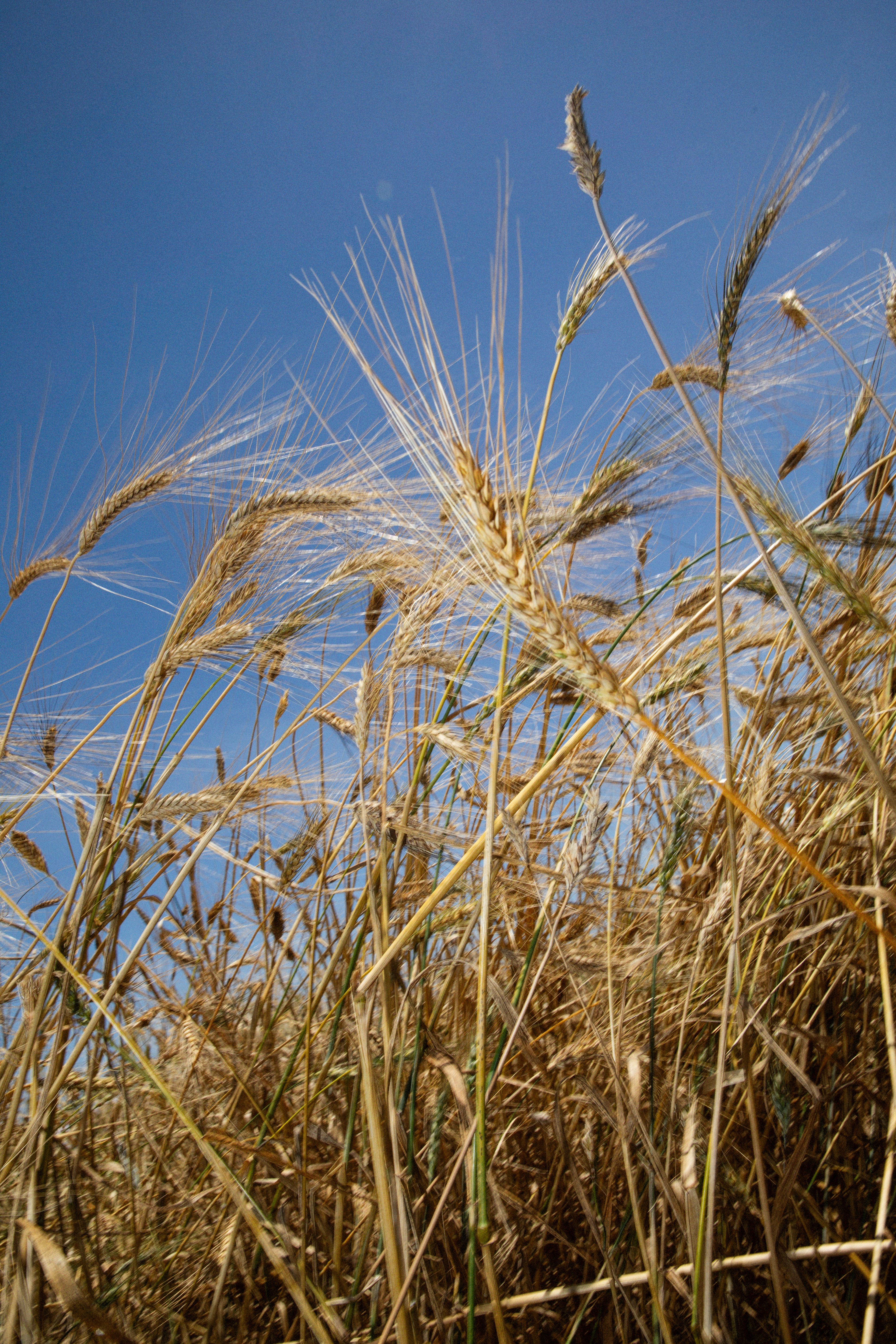
From grain to plate: two grains, two stories
From miscusi, we make our dough using only durum wheat semolina. The reason is the first difference between the two species: what you use them for.
Durum wheat and common (bread) wheat are two distinct botanical species. Durum, Triticum turgidum subsp. durum, has 28 chromosomes and two sets of genetic material; common wheat, Triticum aestivum, has 42 chromosomes and three sets. Two very different DNAs for what we call the same cereal, right? The rest follows from there: milling durum produces semolina, gritty and rough; milling common wheat produces flour, powdery and compactable. Durum gluten is tenacious and doesn't stretch much; common wheat gluten stretches and rises. That's why the former is the wheat of pasta and the latter of bread, even if the boundaries are not quite so clear in the kitchen.
Below, you'll discover what changes during milling, why durum mostly becomes pasta and common wheat mostly becomes bread (with a few famous exceptions), how durum came to Italy, nutritional values with sources and three myths worth debunking.
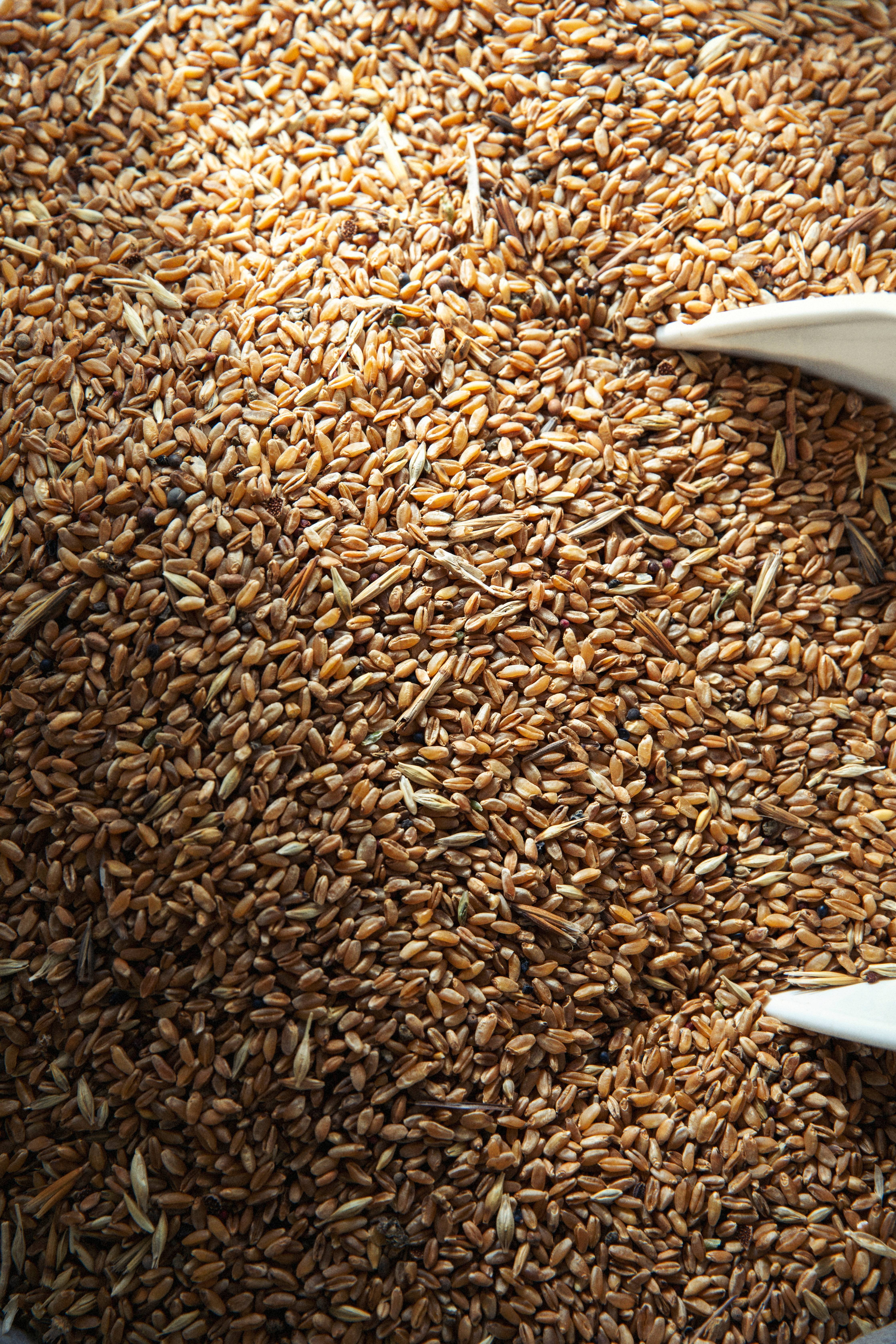
Durum wheat is for pasta, common wheat for bread. Easy, right? Well, not quite.
Semolina and flour: feel the difference with your fingers
A durum wheat grain is harder (who would have guessed?), so during milling it breaks into sharp-edged pieces rather than crumbling.
Put some semolina in one hand and type 00 flour in the other. One feels like sand, the other like talcum powder. Case closed. The reason is inside the grain: common wheat contains two proteins that soften its core, puroindolines, while durum lacks them. Its grain stays vitreous, compact and translucent like glass, and under the rollers it breaks along the cell walls.
This leads to two practical consequences that affect dough:
| 1. the result is a coarse, sharp-edged granular product, semolina, whose larger particles take their time absorbing water; |
| 2. milling damages more starch granules, and damaged starch absorbs water. Lots of it. |
The second point deserves precision, because you often read the opposite: semolina needs more water because of the starch damaged during milling, while particle size matters comparatively little. Researchers proved this rather directly: they took experimental durum wheat lines and introduced the puroindolines they naturally lack. The grain became much softer, semolina yield rose to 60–61% from 44–47%, and damaged starch fell to about 20% from 29%. Add those two proteins and durum stops behaving like durum. These are experimental lines, not real mill bags, so the figures reveal the mechanism, not what to buy Wang 2019 [1].
Italian law, not one for poetry, defines semolina as a sharp-edged granular product obtained by milling and then sifting durum wheat; sifting separates the bran DPR 187/2001 [2]. When the legal definition of an ingredient starts with its edges, those edges matter.
Why durum is the wheat of pasta and common wheat the wheat of bread
Durum gluten is strong and stretches little; common wheat gluten is elastic and expands. Each is suited to a different task.
In bread, gluten needs to stretch and trap the carbon dioxide produced during fermentation, or the loaf won't rise. In pasta, it's the opposite: you need a network that holds its shape in boiling water and keeps the starch inside.
To measure this, there's the alveograph, an instrument that inflates a bubble of dough until it bursts, recording the force required and how far it expands. Yes, there's a job that involves popping dough balloons, and we're glad there is. In durum wheat, tenacity exceeds extensibility by around one and a half times; in common wheat, that relationship is reversed, which helps explain their different uses Sissons 2008 [3].
For pasta, that tenacity is a virtue: the protein network holds starch granules during cooking and reduces both solids lost into the water and stickiness at the surface. The more protein the semolina contains, the less pasta ends up in the cooking water.
| Semolina protein | Solids lost at optimum cooking | Solids lost when overcooked |
|---|---|---|
| 10.3% | 9.4% | 15.5% |
| 13.5% | 8.9% | 13.7% |
| 17.6% | 7.1% | 13.3% |
These are only three protein levels, so the table indicates a trend and should be read as such.
In kitchen terms: more protein-rich semolina leaves less pasta in the water and is more forgiving if you overcook it. Something that has saved us more than once in a kitchen that makes pasta all day.
That's what each wheat is good at, but there are exceptions. Durum wheat bread exists and is a Southern Italian tradition: it's made with remilled semolina, milled a second time to make it finer. Pane di Altamura, a PDO since 2003, must be made this way under its specification Pane di Altamura PDO [4]. Durum's tenacious gluten traps less gas, producing a denser, yellower crumb and a loaf that rises less than one made with common wheat.
The reverse is true too. Common wheat is used for pasta, and lots of it: Emilia's egg pasta sheets, from tagliatelle to tortellini, start with flour, and Italian law allows common wheat in all fresh pasta DPR 187/2001 [2]. The ban applies to dried pasta, which in Italy must be made from durum semolina alone, except for products made for other countries with different rules. In egg pasta, egg proteins also help keep everything together as they coagulate during cooking.

The Romans brought durum wheat to Italy
Common wheat is older than durum; durum conquered Italy (and the world of pasta, at least) much later.
The familiar story puts durum wheat at the beginning of everything, the hardy ancestor from which common wheat later emerged. Nice story, shame about the dates. Bread wheat arose from a cross around nine thousand years ago, and there is no trace yet of durum as we know it today: the wheat involved in that cross was another, now extinct, small-grained species (Triticum turgidum subsp. parvicoccum), found in the archaeological record some two thousand years earlier Levy 2022 [5].
Durum replaced that wheat in Roman times, because it yielded more and had larger grains. Since then it has remained the wheat of the Mediterranean, associated here with pasta while elsewhere it's more of a specialty.
Durum came last to the Italian wheat podium, then, but it did pretty well for itself.
Comparing nutritional values
The two are far more similar than anyone trying to sell you something might suggest, and the comparison should be between products with the same degree of refinement.
| Per 100 g | Type 00 wheat flour | Wholemeal wheat flour | Durum wheat flour |
|---|---|---|---|
| Energy | 323 kcal | 313 kcal | 330 kcal |
| Protein | 11.0 g | 11.9 g | 12.9 g |
| Available carbohydrates | 71.6 g | 61.8 g | 63.2 g |
| Fibre | 2.2 g | 8.4 g | 8.0 g |
| Fat | 0.7 g | 1.9 g | 2.8 g |
Source: the CREA food composition tables, from the Italian Ministry of Agriculture's research centre, entries 000220, 000240 and 000250 CREA [6].
Two caveats are needed to read this table correctly.
| 1. CREA tables have no entry called “durum wheat semolina”: the available entry is called durum wheat flour, and we have used its actual name. It has 8.0 grams of fibre per 100 grams, close to wholemeal common wheat flour and four times as much as type 00, so it probably describes a high-extraction product, made by retaining more of the grain. Putting it next to type 00 doesn't mean you're comparing equally refined products. |
| 2. Minerals cannot be properly compared, since the gaps in the data are not symmetrical: magnesium and zinc are missing for type 00 and wholemeal, while potassium, calcium, phosphorus and iron are missing for durum. We haven't filled those cells using other databases. |
At equal levels of refinement, then, the nutritional gap between the two wheats is small: what really changes is what you do with each.
Three myths about these two wheats that don't hold up
“Common wheat contains more gluten”
It depends which common wheat flour you mean, and the comparison works both ways. Minimum protein levels set by law are 9.00 for type 00 common wheat flour and 10.50 for durum semolina, so durum is higher than type 00. Compared with less refined common wheat flours, the relationship reverses: types 1, 2 and wholemeal must contain at least 12.00, versus 11.50 for semolato (a less thoroughly sifted semolina) and wholemeal semolina DPR 187/2001 [2]. The moral: the winner depends on which bag you put on the table. What really matters between the wheats is how gluten behaves, not just how much there is.
“Durum wheat is wholegrain”
False, and the law says so. The decree specifies four distinct durum milling products, with wholemeal semolina as a separate type: semolina is produced by sifting, whereas wholemeal semolina comes “directly from milling”. Ash content confirms the difference: mineral residue remaining after a sample is burned, which increases with bran content, is at most 0.90 for semolina versus 1.40–1.80 for wholemeal semolina. These are two products with distinct legal names, so if you want wholegrain, look for that word on the label and don't trust the colour. The confusion comes from that: semolina's amber yellow is from carotenoids, the yellow pigments of durum wheat, not bran.
“Durum wheat is easier to digest”
As a general property of the species, we found no authoritative source either supporting this claim or explicitly disproving it. What has been documented concerns pasta: slowly digestible starch depends on the dense matrix and gluten network produced by extrusion (forcing dough through a die under pressure) and drying. It's therefore a matter of processing. The glycaemic index tells a similar story: Giuseppe Di Pede and colleagues' 2021 review in Foods reports an average of 55 for refined-wheat pasta products and 52 for wholegrain ones, explaining it through pasta's compact microstructure Di Pede [7]. We cover this in more detail in our article on the glycaemic index of pasta.
Three myths, and the same pattern three times: someone reads a number, draws the most convenient conclusion and repeats it confidently over dinner. Then it becomes “true”.
At miscusi, semolina is the first decision on the plate
If you came here to learn the difference between durum and common wheat, the short answer is that they are two species with different strengths: durum holds up to cooking, common wheat helps bread rise, and each can do the other's job when needed.
The difference that matters to us comes next, and you can feel it when you bite. We make our Superpasta fresh, without eggs and bronze-die extruded, using water and organic semolinas: durum wheat of the Kronos variety and ancient stone-milled wheats such as Perciasacchi, the name of a Sicilian variety. We also have a legume blend and a sorghum version; we tell the story of the rest of our ingredients here. We have a separate piece on ancient grains.
A harder grain asks more of the mill and gives back pasta that holds its bite: it's a good trade, and one we make every day at miscusi. We're hardly neutral, of course. Come and see for yourself.
Choose a dish from the menu or create your own make your own, choosing shape, sauce and protein source one by one. Runners, dieters, plant-based eaters: almost everyone can eat at miscusi. Book a table at your nearest miscusi.
Quick answers (FAQ)
What's the difference between durum wheat and common wheat?
They are two different botanical species. Milled durum produces sharp-edged granular semolina and tenacious gluten, better suited to pasta; common wheat produces fine flour and elastic gluten, better suited to bread. It isn't a rigid rule: Southern Italy makes durum bread, such as Pane di Altamura, while common wheat is used for fresh egg pasta. At equal refinement, their nutritional values are similar, so the key difference is what you can make with each.
Can you make pasta with common wheat?
Yes, but not every kind. Italian law allows common wheat in fresh pasta, such as egg pasta sheets, and forbids it in dried pasta, which must be made from durum semolina alone, apart from pasta produced for other countries.
Why does durum produce semolina and common wheat produce flour?
Because common wheat grains have two softening proteins, puroindolines, which durum lacks. Durum grains stay vitreous and break along their cell walls during milling rather than crumbling, producing sharp-edged particles instead of powder.
What's the difference between durum flour and common wheat flour?
Durum wheat flour is the non-granular product obtained by milling durum, with ash content between 1.36 and 1.70 and a legal minimum protein content of 11.50. Common wheat flours are classified as types 00, 0, 1, 2 and wholemeal, with ash ranging from 0.55 to 1.70 and minimum protein from 9.00 to 12.00.
Does durum wheat have more gluten than common wheat?
It depends on the comparison. The legal minimum protein is 9.00 for type 00 common wheat flour and 10.50 for semolina, so durum is higher; compared with types 1, 2 and wholemeal common wheat flour, which have a minimum of 12.00, it is lower. The key difference is qualitative: durum gluten is tenacious and not very extensible.
Is semolina wholegrain?
No. The decree distinguishes four durum milling products, including wholemeal semolina as a separate category: regular semolina is sifted to remove bran and has a maximum ash content of 0.90, while wholemeal semolina comes straight from milling and has ash of 1.40–1.80. Its amber colour comes from carotenoids.
Is durum wheat older than common wheat?
No. Bread wheat arose from a cross some nine thousand years ago, when today's durum hadn't appeared yet: the wheat involved was another, now-extinct species. Durum became established in Italy in Roman times because it was more productive and had larger grains.
Sources
| 1. Wang Q, Li Y, Sun F et al., Expression of puroindoline a in durum wheat affects milling and pasting properties, Frontiers in Plant Science, 2019. https://www.frontiersin.org/articles/10.3389/fpls.2019.00482/full |
| 2. Italian Presidential Decree (DPR) of 9 February 2001, no. 187, regulation on the production and marketing of flour and pasta products, consolidated text, articles 1, 2, 6, 9 and 12. https://faolex.fao.org/docs/pdf/ita31873.pdf |
| 3. Sissons M, Role of durum wheat composition on the quality of pasta and bread, Food, 2008. http://globalsciencebooks.info/Online/GSBOnline/images/0812/FOOD_2%282%29/FOOD_2%282%2975-90o.pdf |
| 4. Production specification for the protected designation of origin “Pane di Altamura”, EU geographical indications register (eAmbrosia). https://ec.europa.eu/geographical-indications-register/eambrosia-public-api/api/v1/attachments/59722 |
| 5. Levy AA, Feldman M, Evolution and origin of bread wheat, The Plant Cell, 2022. https://pmc.ncbi.nlm.nih.gov/articles/PMC9252504/ |
| 6. CREA, Food and Nutrition Research Centre, food composition tables, entries 000220, 000240 and 000250. https://www.alimentinutrizione.it/tabelle-nutrizionali/000250 |
| 7. Di Pede G, Dodi R, Scarpa C, Brighenti F, Dall'Asta M, Scazzina F, Glycemic index values of pasta products: an overview, Foods, 2021. https://pmc.ncbi.nlm.nih.gov/articles/PMC8623826/ |